Thinking about buying in Green Valley and torn between a townhome and a single-family house? You are not alone. Both options can work well in this Henderson master-planned area, but they come with very different cost profiles, maintenance responsibilities, and lifestyle tradeoffs. In this guide, you will learn how to compare the real costs, what financing and insurance to expect, and how each option fits common buyer goals in Green Valley. Let’s dive in.
Green Valley housing at a glance
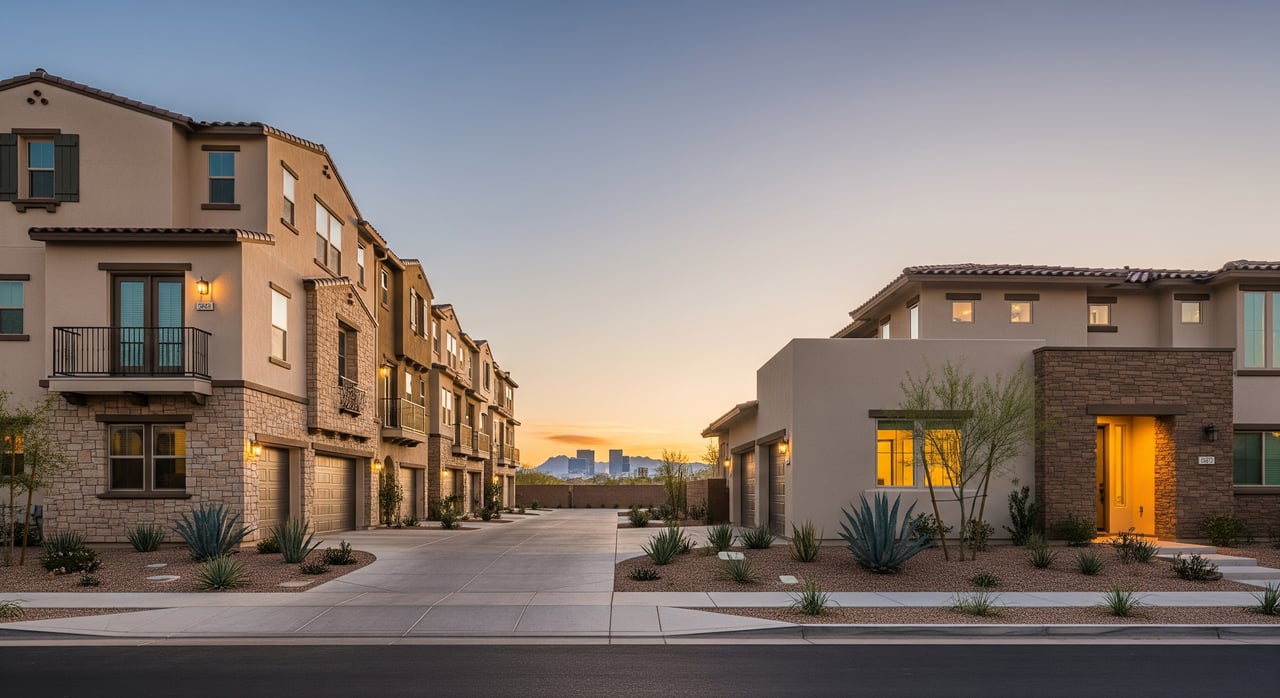
Green Valley is a large, master-planned area within the City of Henderson that offers a wide mix of neighborhoods, parks, shopping, and both attached and detached homes. Many communities have homeowners associations. Townhomes here are typically attached units with shared walls and community amenities. Single-family homes are detached properties on private lots and range from starter homes to custom residences in gated enclaves.
If you want suburban convenience with manageable commutes to Henderson job centers and the Las Vegas metro area, both townhomes and houses in Green Valley can be strong options. The right fit comes down to total cost, maintenance appetite, and lifestyle.
Upfront costs and financing
Purchase price context
Detached homes usually carry higher prices because you are buying the land along with the structure. Townhomes are often priced lower on a per-door basis, which can help first-time buyers or anyone who prefers to keep more cash available for reserves or upgrades. Local market conditions can narrow or widen that price gap at any time, so focus on total monthly cost and future resale positioning rather than list price alone.
Loan differences you should know
Financing rules can differ for townhomes based on how the project is classified. Some townhome communities are treated like condominiums by lenders, while others are considered planned unit developments, often called PUDs. If the project is treated like a condo, your lender may require formal project approval and will review the HOA’s reserves, insurance, and litigation status.
- FHA and VA loans: Many lenders require condo project approval for FHA or VA financing. If a Green Valley townhome community is not on the approved list, you may need a different loan product or a larger down payment. The best move is to talk to a lender early and have them confirm eligibility for the specific community you are considering.
- Down payment: Minimums are set by the loan program, not the property type. That said, tighter condo rules can lead to more conservative requirements, so shop lenders and confirm terms for each community.
Monthly costs that matter
HOA fees and coverage
Townhome HOA fees in Green Valley are commonly mandatory. They often cover exterior maintenance like roofing, siding, and painting, along with common area landscaping and shared amenities such as pools or fitness rooms. Some HOAs also include trash service and parts of the building insurance through a master policy. This can reduce your day-to-day maintenance, but it is an ongoing monthly expense that can rise over time.
Single-family homes may also sit inside HOAs, especially in gated or master-planned sections of Green Valley. Those fees are typically lower because they usually cover fewer services, but the range is wide and depends on the community. Whatever you consider, request the HOA budget, the most recent reserve study, and a history of special assessments before you write an offer.
Property taxes and assessments
Nevada has no state income tax, so property tax is a key local revenue source. Clark County property taxes are generally lower than national averages, but your bill will depend on the parcel and assessed value. Ask for the most recent tax bill, and use Clark County Assessor or Treasurer tools to estimate the impact of a new purchase.
Watch for special assessments from HOAs or municipal districts. These can fund big projects like roof replacements or paving and may be substantial. Review HOA meeting minutes for the past 12 to 24 months to spot any pending or planned assessments.
Insurance requirements
Insurance works differently for attached homes and detached homes.
- Townhome or condo: You will likely carry an HO-6 policy for interior finishes and personal property. The HOA’s master policy typically covers exterior components and common areas. Confirm whether the master policy is bare walls or all-in, and understand how deductibles apply and who is responsible for improvements.
- Single-family home: You will carry a full dwelling policy, usually an HO-3 or similar, that covers the structure, yard structures, and liability. Premiums and coverage vary by size, age, and features of the home.
Ask your insurance agent to review the HOA’s master policy declaration page so you avoid coverage gaps.
Utilities and routine maintenance
Green Valley’s hot, arid climate means high cooling loads in summer. Energy efficiency features like dual-pane windows and programmable thermostats help control electric bills. Townhome owners may have lower exterior water costs if the HOA handles landscaping. Single-family owners carry full utility bills, and water use can increase for turf yards unless you convert to xeriscaping.
Plan a maintenance reserve that fits the property type and age. For detached homes, a common rule of thumb is 1 percent to 3 percent of the home’s purchase price per year for upkeep and repairs, depending on age and systems. For townhomes, your interior-only maintenance may be lower because the HOA covers exterior items, but your HOA dues replace some of those costs. In both cases, check the age and service history of major systems like HVAC, the water heater, windows, and the roof.
Space, privacy, and lifestyle
Privacy and noise
Townhomes have shared walls, which increases the chance of noise transfer. Newer construction can offer better sound-rated party walls, and end units can help with privacy. HOAs often have quiet hours and noise rules that support peaceful enjoyment, but your experience will vary by building quality and neighbors.
Detached homes provide greater separation and more control over your outdoor space. If a private yard and limited shared walls are priorities, a single-family home may be the better fit.
Indoor and outdoor space
Townhomes often have a smaller footprint with vertical layouts. You might see two or three stories, compact patios, and balconies. This lock-and-leave style can be ideal if you travel often or do not want to manage a yard.
Detached homes typically offer more square footage for storage, garage space, and a private yard. If you want room for gardening, outdoor entertaining, or larger pets, a house may suit your lifestyle. Always check HOA pet rules if you are considering a townhome.
Parking and storage
Many townhomes include a one or two-car garage, with specific rules for guest and street parking. Some HOAs restrict street parking overnight. Single-family homes generally offer larger garages, driveways, and potential side yards that can accommodate additional storage, subject to local zoning and HOA rules.
Resale and investment outlook in Green Valley
Appreciation drivers
In many markets, detached homes capture the land appreciation component, which can support longer-term gains. Townhome appreciation depends on buyer demand for low-maintenance living, location, and the health of the HOA. In Green Valley, access to amenities, commute patterns, and community reputation can influence value for both types.
Liquidity and market cycles
Attached homes and condos often draw first-time buyers, downsizers, and some investors. That can be a narrower pool, and during market downturns, attached properties sometimes see larger percentage swings. Single-family homes appeal to a broader audience that includes families, investors, and move-up buyers, which can help liquidity in some cycles.
Market figures change quickly in Henderson. Use real-time local MLS data to compare median prices, days on market, and inventory by property type in Green Valley before you write an offer.
Rental and HOA rules
If you plan to rent, check HOA rental restrictions and any caps on the percentage of units that can be leased. Some communities set minimum lease terms, and others limit short-term rentals. For investors, townhomes can offer a lower entry price and steady demand from professionals, while single-family homes typically command higher rents but require more maintenance and capital reserves.
A practical comparison checklist
Use this checklist to compare an actual townhome and a single-family home in Green Valley. Request documents early so you have time to review.
- Total monthly cost:
- Mortgage principal and interest from your lender scenarios
- HOA dues and a clear list of what they cover, including insurance, landscaping, roof, pool, and trash
- Property taxes using the most recent bill and parcel lookups
- Homeowners insurance estimate, HO-3 for houses, HO-6 for townhomes plus the HOA master policy details
- Utilities for each property, including electric, water, gas, sewer, and trash
- Estimated maintenance reserve, 1 to 3 percent per year for detached homes and lower for townhomes if the HOA covers exterior items
- HOA documents for townhomes and any HOA-governed single-family homes:
- CC&Rs, bylaws, and rules
- Current budget and reserve study
- Insurance master policy declaration page
- Meeting minutes for the last 12 to 24 months
- Any pending or planned special assessments
- Rental restrictions and the percentage of units rented
- Building and unit condition:
- Age and service history of HVAC, roof, windows, appliances, and water heater
- Pest and termite inspections
- Signs of water intrusion or foundation movement
- Parking and guest policies:
- Assigned spaces, garage capacity, guest parking rules, and street parking limitations
- Privacy and noise:
- Shared wall orientation, end unit options, distance to common areas
- Resale and marketability:
- Comparable sales from the past 6 to 12 months for both product types in Green Valley
- Typical buyer profile for the home type
- Zoning and future development:
- Planned projects or community changes that could affect noise, traffic, views, or amenities
Which is right for you?
- You prefer low maintenance, do not want yard work, or want a lower entry price: a townhome may fit well if you are comfortable with HOA rules and fees.
- You need a private yard, want room for pets or outdoor projects, or value control and long-term appreciation drivers: a single-family home may be the better match.
- You are investing: verify rental rules, compare cash flow after HOA dues and maintenance reserves, and confirm that your lender and the HOA allow your intended use.
The best decision blends lifestyle fit with a clear-eyed view of total cost. If you weigh HOA dues, insurance, utilities, maintenance, and resale factors side by side, you will see the tradeoffs clearly for Green Valley.
Ready to run the numbers on a specific property or two? We can help you model the total monthly cost, review HOA documents, coordinate lender checks for townhome project eligibility, and compare resale comps in real time. For a calm, data-driven path to your next move in Henderson, connect with Belen Clark. Request a Personalized Market Consultation.
FAQs
How do HOA fees in Green Valley townhomes affect total cost?
- HOA dues often cover exterior maintenance, common area landscaping, amenities, and part of the building insurance, which reduces your direct upkeep but becomes a fixed monthly expense that should be included in your total cost comparison.
What insurance do I need for a Green Valley townhome?
- Most owners carry an HO-6 policy for interior finishes and personal property while the HOA holds a master policy for exterior and common areas, so confirm master policy type and deductibles to avoid coverage gaps.
Can I use FHA or VA financing on a townhome in Green Valley?
- It depends on how the project is classified and whether it is approved; many lenders require condo project approval for FHA or VA loans, so have your lender verify eligibility for the specific community early.
How do Henderson property taxes compare between townhomes and houses?
- Clark County property taxes are based on parcel and assessed value rather than property type, so request the most recent tax bill for each property and use county tools to estimate your payment.
Are townhomes louder than detached houses in Green Valley?
- Shared walls in townhomes increase the chance of noise transfer, although newer sound-rated construction and end unit layouts can help, while detached homes offer greater separation and outdoor privacy.
What should investors review in Green Valley HOAs before buying?
- Study rental restrictions and any caps, review budgets and reserve studies, check for pending special assessments or litigation, and confirm that your financing and intended lease terms are allowed by the community.